
How Long to Stay in a Sauna at a Malta Spa | Carisma Spa

How Long to Stay in a Sauna at a Malta Spa
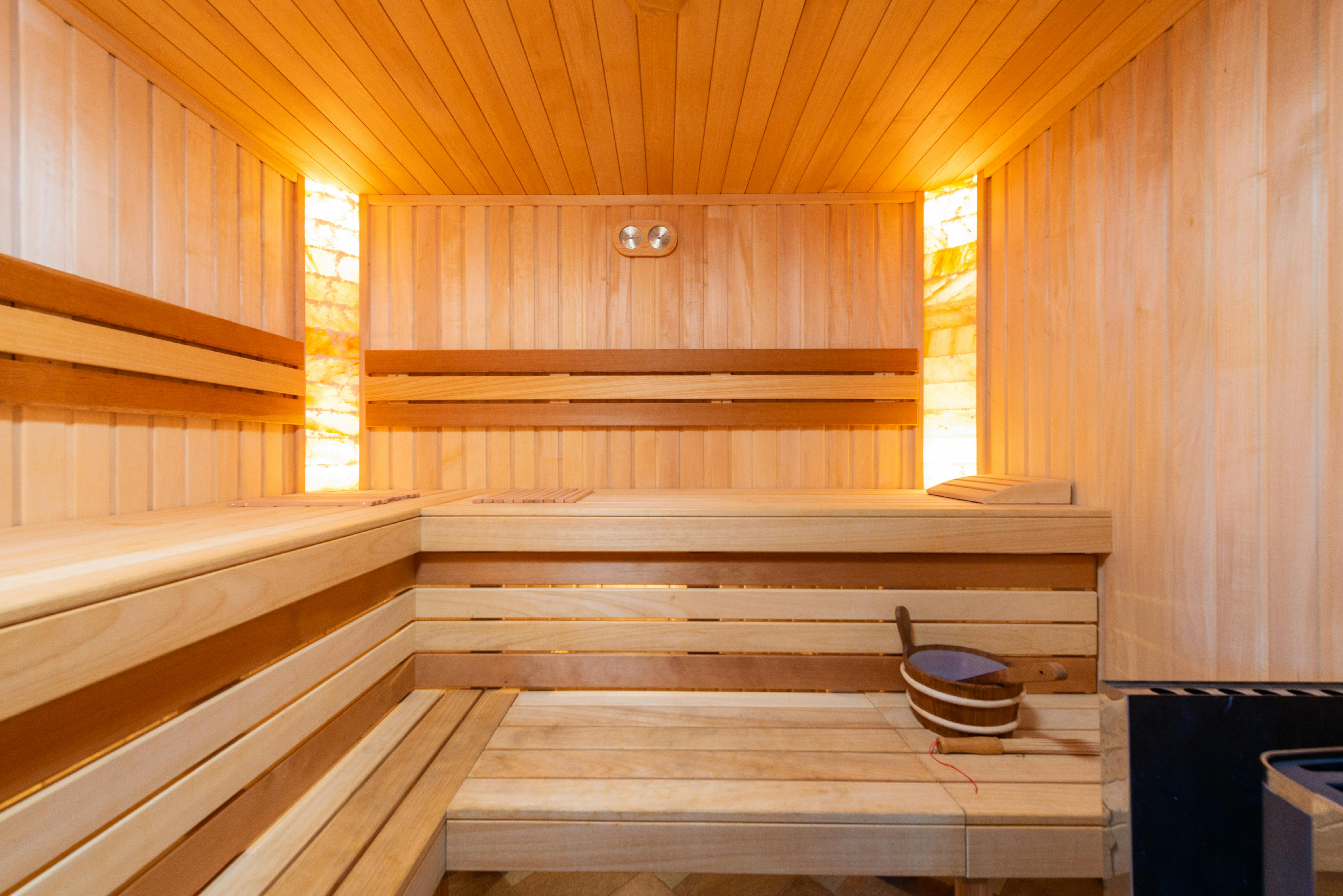
As a general guide: stay in a sauna for 8 to 20 minutes per round, depending on your experience level. Beginners do best at 8 to 10 minutes. Experienced users can extend to 15 to 20 minutes. Never exceed 20 minutes in a single round. Cool down for at least 10 minutes between sessions, and drink water before, during, and after.
TL;DR — Key Takeaways
Beginners: 8 to 10 minutes per round, lower bench, one round only
Experienced users: 15 to 20 minutes per round, up to three rounds
Cool down for a minimum of 10 minutes between each round
Drink 500 ml of water before entering; sip water between rounds
Leave immediately if you feel dizzy, nauseous, or stop sweating
Two to four sessions per week is the evidence-based safe frequency
You walk into a sauna at a Malta spa and that dry, cedar-scented warmth settles around your shoulders like something remembered. The heat builds slowly. Your breath deepens. And somewhere around the five-minute mark, the question surfaces: how long should I actually stay in here?
It is one of the most common questions guests ask at Carisma Spa, and it deserves a real answer — not a vague "listen to your body," but specific, grounded guidance you can trust. Knowing how long to stay in a sauna at a Malta spa is what separates a truly restorative session from one that leaves you light-headed in the changing room.
This guide gives you that answer in full: the right timing for your experience level, how to cool down properly, how hydration works in Malta's warm climate, and the signs that tell you it is time to step out.
The 8-to-20 Minute Rule (and Why It Exists)
The 8-to-20 minute window is not arbitrary. It is grounded in how the body responds to sustained heat exposure.
In the first few minutes, your skin temperature rises and blood vessels near the surface dilate. Your heart rate increases moderately — roughly equivalent to a brisk walk. Between minutes five and fifteen, core body temperature begins to climb, sweating intensifies, and the parasympathetic nervous system starts to shift into recovery mode. This is the therapeutic window: the period where cardiovascular, muscular, and psychological benefits accumulate most efficiently.
Research published in JAMA Internal Medicine tracking over 2,300 Finnish men found that sauna use at this frequency and duration was associated with a significantly reduced risk of cardiovascular events. The benefit curve rises steeply through the 15-to-20 minute zone.
What increases after that point is not benefit but strain — greater fluid loss, rising core temperature, and meaningfully elevated cardiovascular demand. A Finnish sauna typically sits between 80°C and 100°C. At those temperatures, staying beyond 20 minutes in a single round adds risk without adding return.
The rule, then, is simple: enter for 8 to 20 minutes, exit before the discomfort becomes sharp, and give your body the cool-down time it needs before you go back in.
Beginners vs Experienced Sauna Users — Two Different Approaches
The same sauna feels very different depending on whether it is your first visit or your fiftieth.
For first-time sauna users at a Malta spa, the approach is gentle:
Sit on the lowest bench, where the air is several degrees cooler
Set a mental target of 8 to 10 minutes — use a sauna timer if one is available
Breathe slowly and steadily through the nose
Do not try to out-stay other guests; there is no reward for endurance
Exit at the first feeling of real discomfort, not just warmth
Take one round only on your first visit, and spend 15 to 20 minutes cooling down fully before leaving
Your body needs time to learn the sauna rhythm. The benefits are cumulative across weeks and months, not concentrated in one ambitious session.
For experienced sauna users, the session can be more structured:
15 to 20 minutes per round on the upper or middle bench
Two to three rounds in a single visit, with 10-to-15-minute cool-down breaks between each
The cool-down should be active: a cold shower, a plunge pool if available, or at minimum fresh air and seated rest — not simply sitting in the changing room
Total sauna time across a visit should rarely exceed 45 to 60 minutes of in-sauna time combined
Pairing your sauna with our hammam ritual creates a layered heat-and-steam experience that many guests find more restorative than the sauna alone — the alternation between dry heat and humid warmth offers different physiological benefits and makes the session feel more spacious and intentional.
The Art of Cooling Down Between Sessions
The cool-down is not a break from the sauna experience. It is half of it.
When you step out of the sauna, your body is still working hard. Core temperature remains elevated for several minutes. Blood that has been redirected to the skin's surface needs to redistribute. Your heart rate, still elevated, needs time to return to resting pace.
A proper cool-down has three phases:
Phase 1 — The exit (minutes 0 to 2): Step out calmly. Sit on a bench in the cooling area or step into fresh air. Do not lie down immediately. Let gravity assist blood flow regulation.
Phase 2 — The cooling (minutes 2 to 8): A cool shower — not ice cold unless you are experienced with contrast therapy — helps lower skin temperature quickly. Breathe through the transition. This is where many guests feel the pleasant post-sauna clarity begin to settle.
Phase 3 — The rest (minutes 8 to 15): Sit quietly. Drink water. Let your heart rate normalise before you consider another round. This rest phase is where the parasympathetic nervous system does its deepest recovery work.
Skipping the cool-down and re-entering immediately is the most common mistake guests make. The body needs that 10-to-15 minute window to reset safely.
Sauna Sessions in Malta's Mediterranean Climate
Malta's climate adds a layer of consideration that generic sauna guides written for northern European readers rarely address.
In Malta, ambient temperatures from May through October regularly sit between 28°C and 36°C. Even in the cooler months, outdoor temperatures rarely drop below 15°C. This matters for two reasons.
First, if you arrive at the spa having spent time in the sun or in a warm outdoor environment, your body is already working to manage heat before you enter the sauna. Your starting point is not the same as someone stepping in from a cold street. This means your safe sauna duration may be slightly shorter, and your pre-hydration needs are greater.
Second, the cool-down between rounds behaves differently in Malta. In Finland, stepping outside into -10°C air provides an immediate and dramatic cooling effect. At a Malta spa, stepping into air-conditioned cooling areas or a plunge pool serves the same function — but the transition is less extreme. This makes deliberate cool-down tools (cold showers, plunge pools) more important rather than less.
At Carisma Spa, we recommend guests arriving from outdoor summer heat to drink at least 700 ml of water before entering the thermal area, rather than the standard 500 ml, and to begin on the lower bench regardless of their experience level until the body has fully adjusted.
Pairing your sauna session with a spa day gives you the full thermal journey in a paced, guided environment — a particularly good choice for those visiting during the warmer months when managing heat acclimatisation is part of the experience.
How Often Should You Use the Sauna Each Week?
The frequency question is just as important as the duration question, and the two are connected.
A landmark Finnish cohort study found that men who used a sauna four to seven times per week had a 63% lower risk of sudden cardiac death compared to those who used it once per week. Three sessions per week showed a 22% reduction. These figures apply to sauna use within the 15-to-20 minute per round, multiple-round structure described above — not to marathon single sessions.
For most healthy adults at a Malta spa, two to four sessions per week is the practical target:
Once per week: A good starting rhythm for new users. Allows the body to adapt without overstimulation.
Two to three times per week: The optimal frequency for most guests. Captures the majority of cardiovascular and recovery benefits.
Four or more times per week: Appropriate for experienced users with no contraindications, and for those using the sauna as part of a structured athletic recovery protocol.
If you are visiting a Malta spa once or twice on a holiday or short break, a single well-structured session of two to three rounds is entirely appropriate. You do not need to compress a week's worth of sauna into one long session — that is when strain outweighs benefit.
Special Considerations — Children, Elderly Guests, and Pregnancy
Children: Children under 12 should generally avoid traditional Finnish saunas. Their thermoregulatory systems are less developed than adults, meaning they overheat faster and may not recognise or communicate discomfort reliably. Children aged 12 to 16 should use the sauna only with adult supervision, at shorter durations of 5 to 8 minutes, and on the lower bench.
Older adults: Age alone is not a contraindication. Many guests in their 70s and 80s use saunas safely and enjoyably. The considerations are: shorter sessions of 8 to 12 minutes rather than 15 to 20, lower bench positioning, careful pre-hydration, and ideally visiting with a companion. Anyone with diagnosed heart disease, a history of stroke, or poorly controlled blood pressure should seek medical clearance before using a sauna.
Pregnancy: Pregnant guests should avoid traditional saunas, particularly in the first trimester. Elevated core body temperature during early pregnancy carries documented risks. Infrared saunas, which operate at lower temperatures, may be discussed with a healthcare provider, but traditional saunas at 80°C to 100°C are not recommended during pregnancy at any stage.
Guests with chronic conditions: Diabetes, low blood pressure, kidney conditions, and certain medications (particularly diuretics, beta-blockers, and anticoagulants) interact with sauna use in ways that warrant a conversation with your doctor first.
If you are planning a couples package that includes thermal experiences and have any health questions, our team is always available to advise before you arrive.
FAQs About Sauna Duration in Malta
How long should you stay in a sauna for the first time?
For a first-time sauna visit, 8 to 10 minutes is the ideal starting point. Sit on the lower bench where the air is cooler, breathe slowly, and listen to your body. You do not need to sweat heavily to benefit. Step out at the first sign of discomfort, cool down for 10 to 15 minutes, and only re-enter if you feel comfortable doing so. One round is enough for a first session — the benefits build over time, not in a single visit.
Is 30 minutes in the sauna too long?
Yes, 30 continuous minutes in a traditional Finnish sauna is too long for most people. The physiological benefits plateau after 20 minutes, while the risks of dehydration and heat stress increase significantly beyond that point. If you want a longer overall session, take multiple rounds of 15 to 20 minutes with proper cool-down breaks in between rather than one extended stay. The total session time across two or three rounds can be substantial; it is the single unbroken duration that carries risk.
How many sauna sessions per week is safe?
Two to four sauna sessions per week is a safe and effective rhythm for most healthy adults. Finnish research suggests that three or more sessions per week are linked to the greatest cardiovascular and recovery benefits. If you are new to sauna, begin with one session weekly, assess how your body responds over several days, and gradually increase frequency over a month or two. Quality of each session matters more than volume.
What are the signs you should leave the sauna immediately?
Leave the sauna at once if you feel dizziness, nausea, a pounding or irregular heartbeat, sudden weakness, or if you stop sweating despite the heat. Stopping sweating is a particularly important warning sign — it can indicate your body's cooling system is overwhelmed. Shortness of breath and muscle cramps are also clear signals to exit calmly, sit in cool air, and drink water slowly. Never push through these sensations.
Can children or elderly people use a sauna safely?
Children under 12 should generally avoid traditional saunas, as their bodies regulate heat less efficiently than adults. Older adults can use saunas safely with appropriate precautions: shorter sessions of 8 to 12 minutes, lower bench seating, careful pre-hydration, and a companion nearby. Anyone with a heart condition, low blood pressure, or other chronic health condition should consult their doctor before using a sauna. Our team at Carisma Spa is happy to advise on thermal experiences suited to different guests and health profiles.
Your Sauna Session, Done Well
Knowing how long to stay in a sauna at a Malta spa is not about finding a single perfect number. It is about understanding the rhythm: enter with intention, stay within your body's honest signals, cool down fully, hydrate carefully, and let the session be what it is — a considered pause, not an endurance test.
The sauna has been used for centuries precisely because of this quality: it rewards patience over ambition. Eight minutes done well, with a proper cool-down and a glass of water, is more restorative than thirty minutes endured. That is the truth of it.
If you would like to experience this for yourself, our massages pair beautifully with a sauna session, and our full spa day experience gives you the complete thermal journey in a pace and environment designed for exactly this kind of restoration.
We look forward to welcoming you.
Peacefully,
Sarah
FAQ SCHEMA JSON-LD:
STATUS: On-Page SEO Optimized — Ready for Google Doc
━━━━━━━━━━━━━━━━━━━━━━━━━━━━━━━━━
집에서 편안하게 휴식을 취하면서 몸 관리까지 함께할 수 있다는 점이 마음에 들었습니다. 바쁜 직장인이나 외출이 출장마사지 어려운 날에도 일정에 맞춰 이용하기 좋고, 긴장된 근육을 부드럽게 관리하며 휴식 시간을 더욱 알차게 활용할 수 있어 만족스러웠습니다.
디지털 서비스를 편리하게 이용하려면 결제 방식과 이용 조건을 정확히 확인하는 것이 중요합니다. 비교적 작은 금액을 처리할 상품권할인 때 활용할 수 있고 간편한 이용 과정이 장점이지만 과도한 사용은 피하는 것이 좋습니다.